
A clear aromatic solvent, specified four ways.
Shell Toluene from Ascent Group Co., Ltd is supplied in four specification grades — Solvent, Petrochemical Grade, Nitration Grade and Commercial — for coatings, inks, adhesives, chemical synthesis and fuel blending. One consistent molecule (C7H8, CAS 108-88-3), differentiated by the limits that matter to your process: purity, benzene, non-aromatics, sulfur, water and distillation range.
Focused on solvent quality, grade consistency and dependable supply.
Ascent Group Co., Ltd supplies Shell Toluene to industrial buyers in coatings, adhesives, printing inks, chemical synthesis and fuel blending. Our work centres on the parameters that determine whether an aromatic solvent performs in a real process: assay by gas chromatography, water by Karl Fischer titration, colour, non-aromatics, sulfur and distillation range.
Quality control follows internationally recognized quality standards, with batch documentation supporting each shipment so incoming inspection has a clear reference. Because toluene is a Class 3 flammable liquid, storage, handling and loading procedures are built around ventilation, grounding and bonding, and separation from oxidizers and ignition sources.
Rather than a single generic offer, we keep four clearly defined specification grades, so a buyer can match the material to the sensitivity of the process — from general thinning to mixed-acid nitration. Technical support is available to help select the right grade and packing.
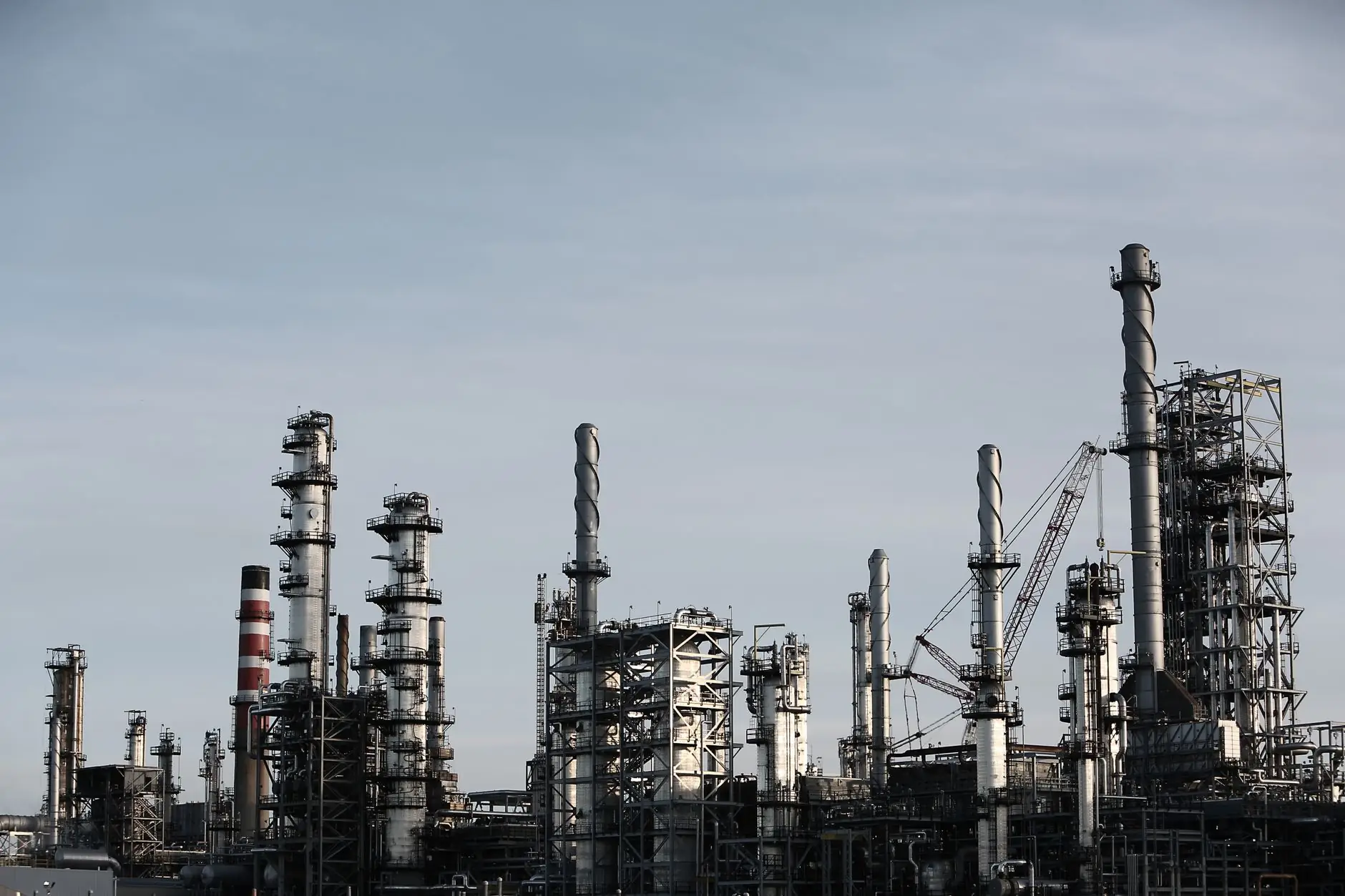
The same C7H8 molecule, specified for different duties.
Toluene is not sold as a single physical model: product identity is expressed through specification packages. The four Shell Toluene grades below differ in impurity ceilings and intended duty rather than in molecular structure. Exact grade limits are confirmed against the applicable standard and the lot documentation — Typical values, not for specification.
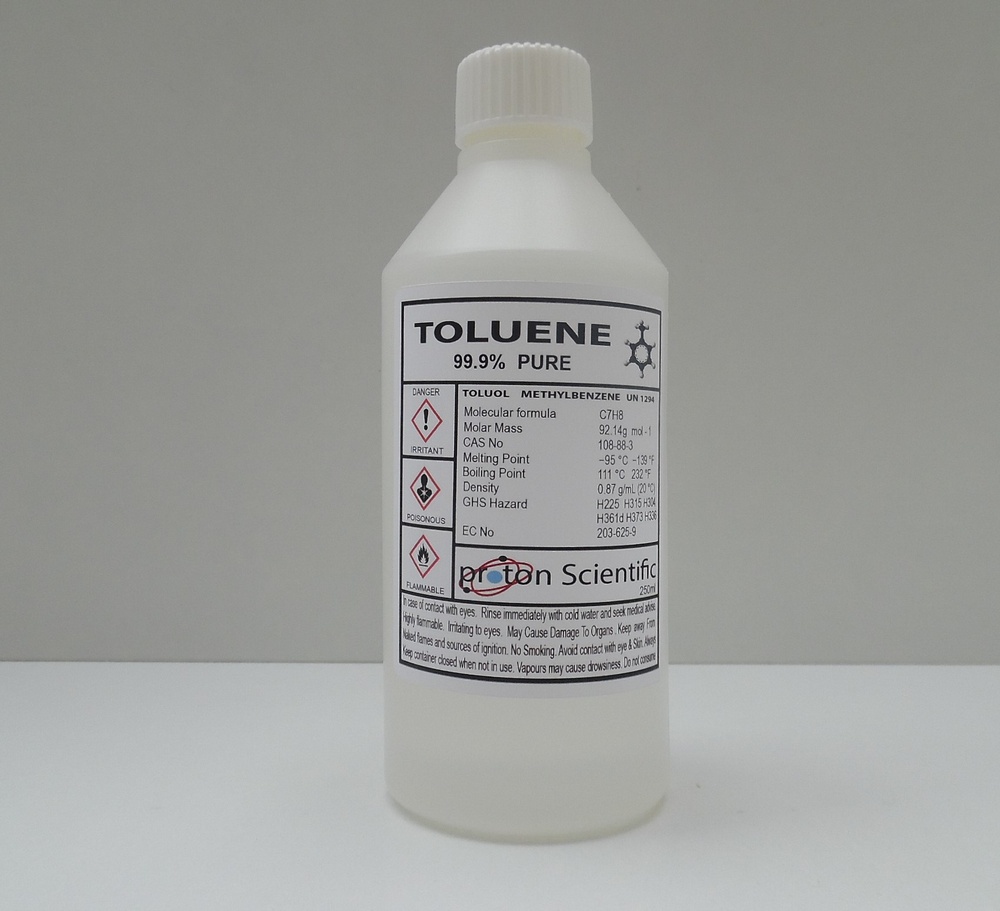
High-purity solvent grade for coatings, printing inks, adhesives and general formulation. Tight control of colour, water and non-volatile residue helps keep film appearance and evaporation behaviour consistent.
Inquire About This Grade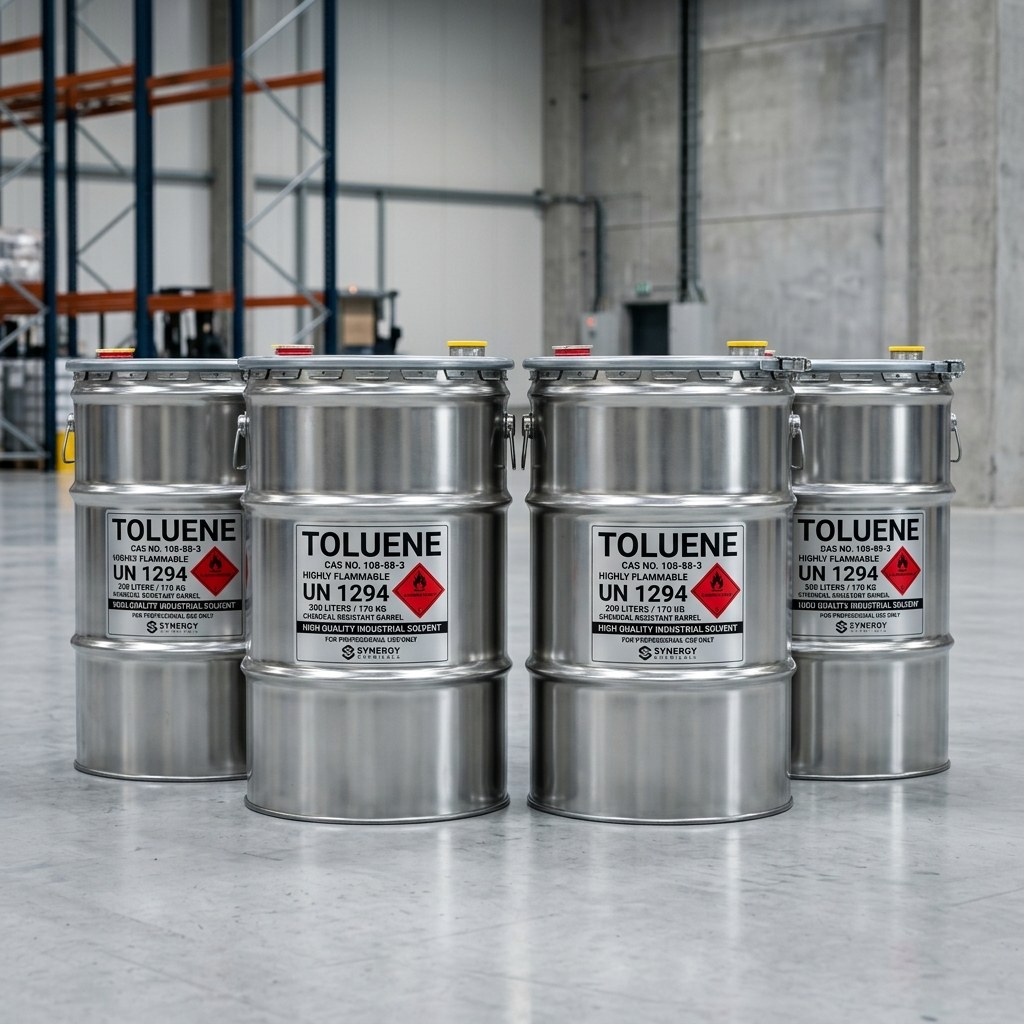
Feedstock grade for conversion to benzene and xylenes, toluene diisocyanate (TDI), benzoic acid and other derivatives. Control of benzene, non-aromatics, sulfur and moisture protects downstream catalysts and selectivity.
Inquire About This Grade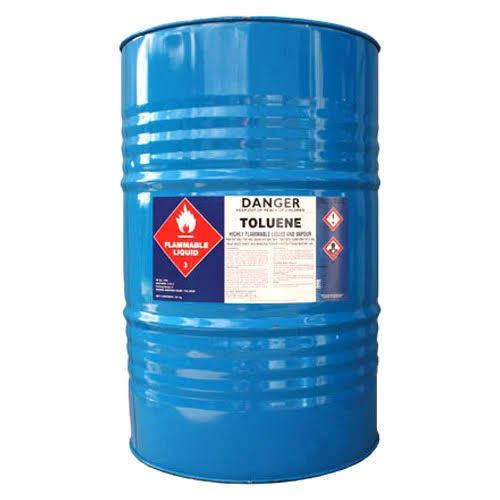
High-purity grade for mixed-acid nitration and dinitrotoluene (DNT) production. A narrow distillation range around 110.6 °C, low benzene and low sulfur are the priorities; commonly referenced against ASTM D841-type specifications.
Inquire About This GradeGeneral-purpose industrial grade for paint thinners, rubber processing, degreasing and fuel blending. Balanced solvency and evaporation rate at a broad specification, commonly referenced against ASTM D362-type specifications.
Inquire About This GradeTypical values, not for specification. ASTM D841 (nitration) and ASTM D362 (industrial) are the common grade-spec frameworks; grade-specific purity and impurity ceilings are not published uniformly across suppliers and are confirmed against the lot documentation.
Published data for toluene (CAS 108-88-3), compiled from public technical sources.
The table below lists commonly published physical constants for toluene. These are properties of the molecule itself and apply across all four grades; grade differentiation is set by specification limits, not by these constants. Typical values, not for specification — the controlling values for a specific lot are those in the accompanying documentation.
| CAS / EC | 108-88-3 / 203-625-9 |
| Formula / MW | C7H8 / 92.14 g/mol |
| Appearance / odour | Clear, colourless liquid; characteristic aromatic odour |
| Boiling point (101.3 kPa) | 110.6 °C (lit. 110–111 °C) |
| Melting point | ≈ −95 °C (lit. −93 °C) |
| Density (20 °C) | 0.866–0.870 g/cm³ |
| Flash point (closed cup) | 4.4 °C |
| Autoignition temperature | ≈ 480–535 °C (reported values vary with test method) |
| Refractive index (20 °C) | 1.496–1.4969 |
| Vapour pressure (20 °C) | ≈ 22 mmHg (≈ 2.9 kPa) |
| Vapour density (air = 1) | ≈ 3.1–3.2 |
| Water solubility (20 °C) | ≈ 0.52 g/L; practically insoluble; miscible with most organic solvents |
| Flammable limits in air | ≈ 1.1–7.1 vol% |
| Typical assay | ≥ 99.5 wt% for industrial / nitration grades; ≥ 99.8 wt% for high-purity solvent grades |
| Transport | UN 1294, Class 3, PG II; HS 2902.30.00 |
| GHS hazard statements | H225, H304, H315, H336, H361d, H373 |
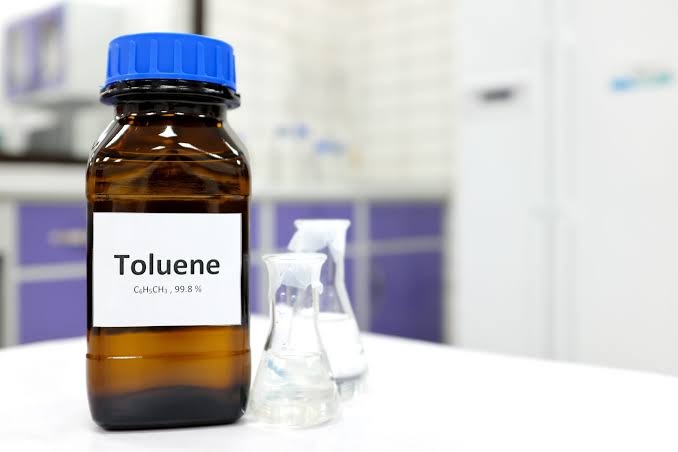
Typical values, not for specification.
Solvent, feedstock and blendstock across six process areas.
Toluene combines strong solvency for resins and rubber with a moderate evaporation rate between benzene and xylene, which is why it stays a standard choice in coating and ink formulation. As a chemical intermediate it is converted to benzene and xylenes, TDI for polyurethane foam, benzoic acid and nitrotoluene / dinitrotoluene intermediates. The grade you choose should follow the sensitivity of the application.
thinner and solvent for alkyd, acrylic, nitrocellulose and epoxy systems
resin dissolution and evaporation control
rubber- and PU-based formulations
benzene, xylenes, TDI, benzoic acid, nitrotoluene intermediates
dissolution, degreasing, surface cleaning
high-octane aromatic component
Consistency, documentation and grade fit — not claims.
Four defined specification grades let you buy to the process, not to a generic description. Batch-to-batch consistency is checked on the parameters that affect performance; packing is available in drums, IBC tanks and bulk; and handling follows Class 3 flammable-liquid practice. Technical support covers grade selection, storage questions and packing choice.
Four grade specifications matched to process sensitivity
Assay, water, colour, sulfur and distillation range checked per batch
Drums, IBC tanks and bulk delivery options
Class 3 handling, grounding and ventilation procedures
Grade-selection and application support from a named contact
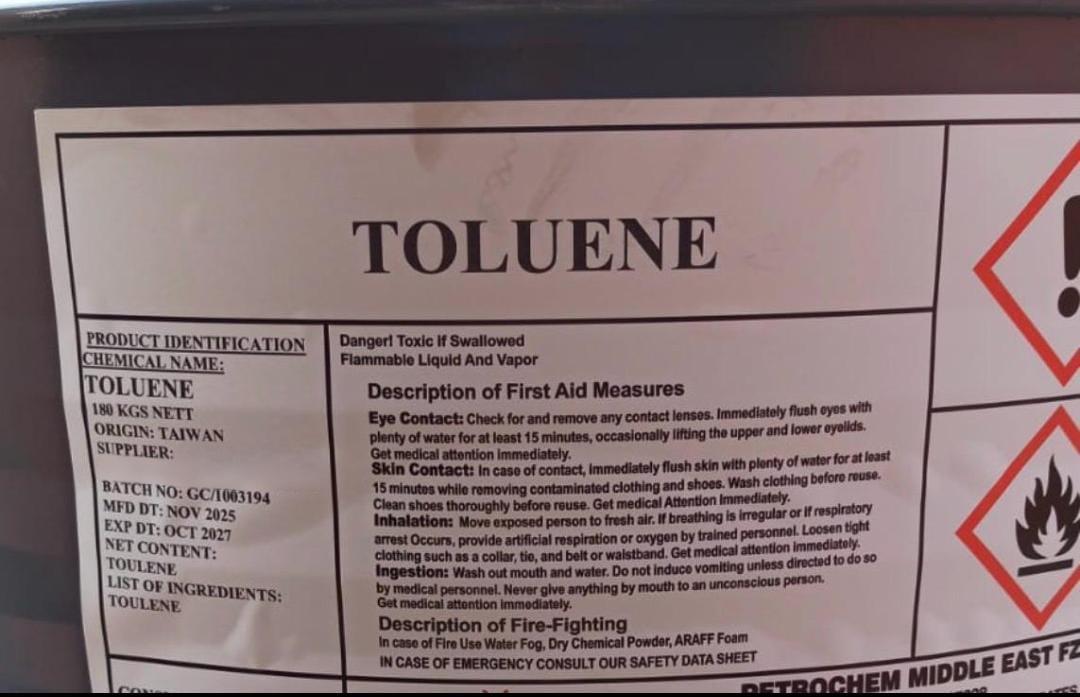
From 200 L drums to bulk road tankers.
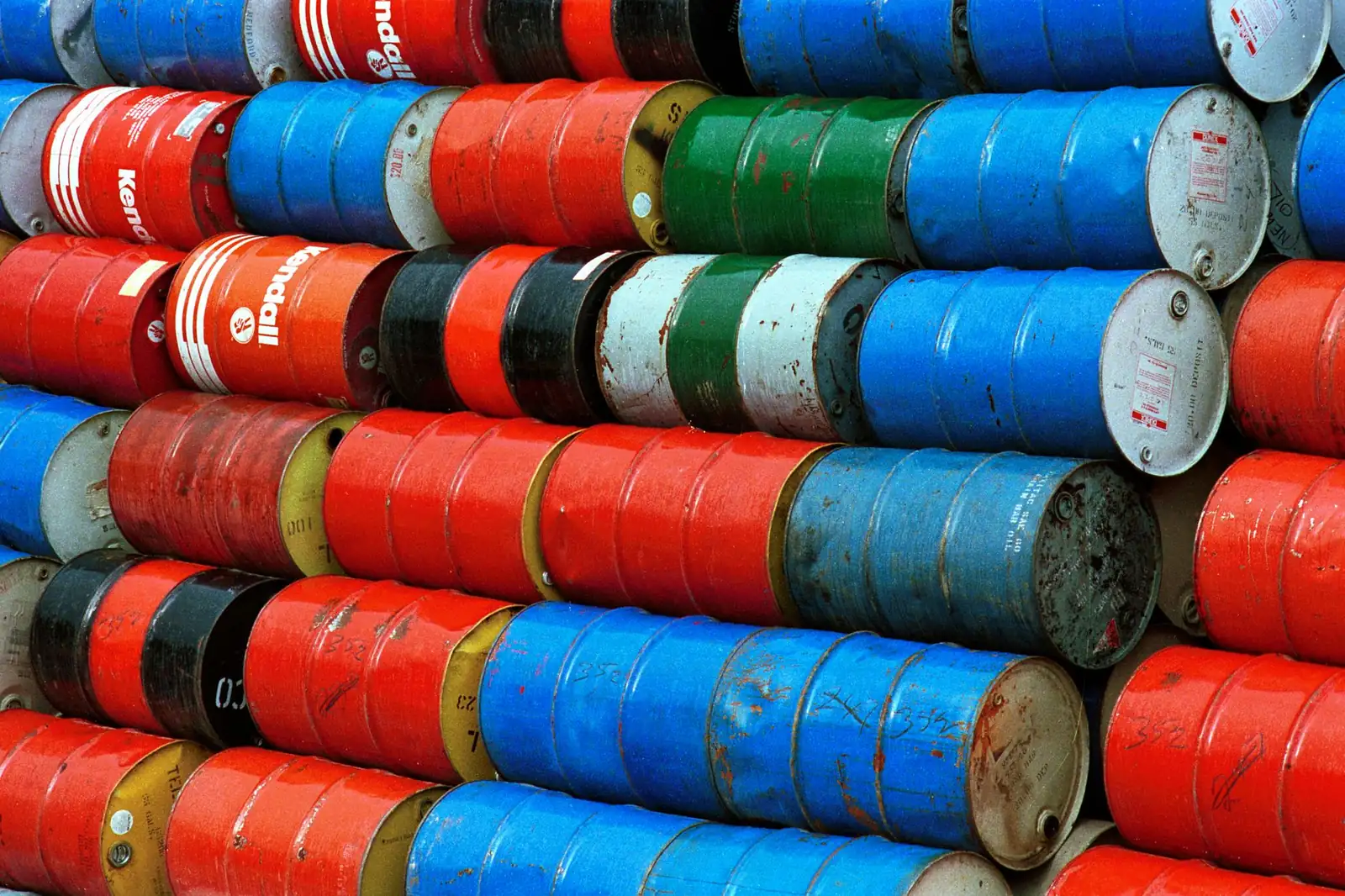
Toluene is a Class 3 flammable liquid (UN 1294, PG II) and is packed accordingly. Common options include 200 L steel drums (about 180 kg net), 1,000 L IBC tanks and bulk road tankers; smaller cans may be available for sampling. Containers should be kept tightly closed in a cool, dry, well-ventilated area away from oxidizers and ignition sources, with grounding and bonding during transfer. Delivery terms, lead time and packing are confirmed per order. Typical values, not for specification.
≈180 kg net
intermediate bulk
continuous supply
Technical, knowledge and commercial notes, grouped by grade.
Twelve short notes across the four Shell Toluene grades, arranged in three lines — Technical, Knowledge and Commercial. Cards are display-only summaries; no detail pages in this single-page site.
Toluene evaporates between benzene and xylene, giving formulators a workable window for flow and levelling. Its solvency for alkyd, acrylic and nitrocellulose resins is why it remains a reference solvent in coating design. Typical values, not for specification.

Assay by GC, water by Karl Fischer titration, colour on the APHA or Saybolt scale, non-volatile residue and non-aromatics are the parameters that separate a high-purity solvent grade from a broad industrial one.

Film appearance, drying time and residue sensitivity should drive grade selection more than price alone. Confirm packing and volume early, since drum, IBC and bulk options carry different handling needs.
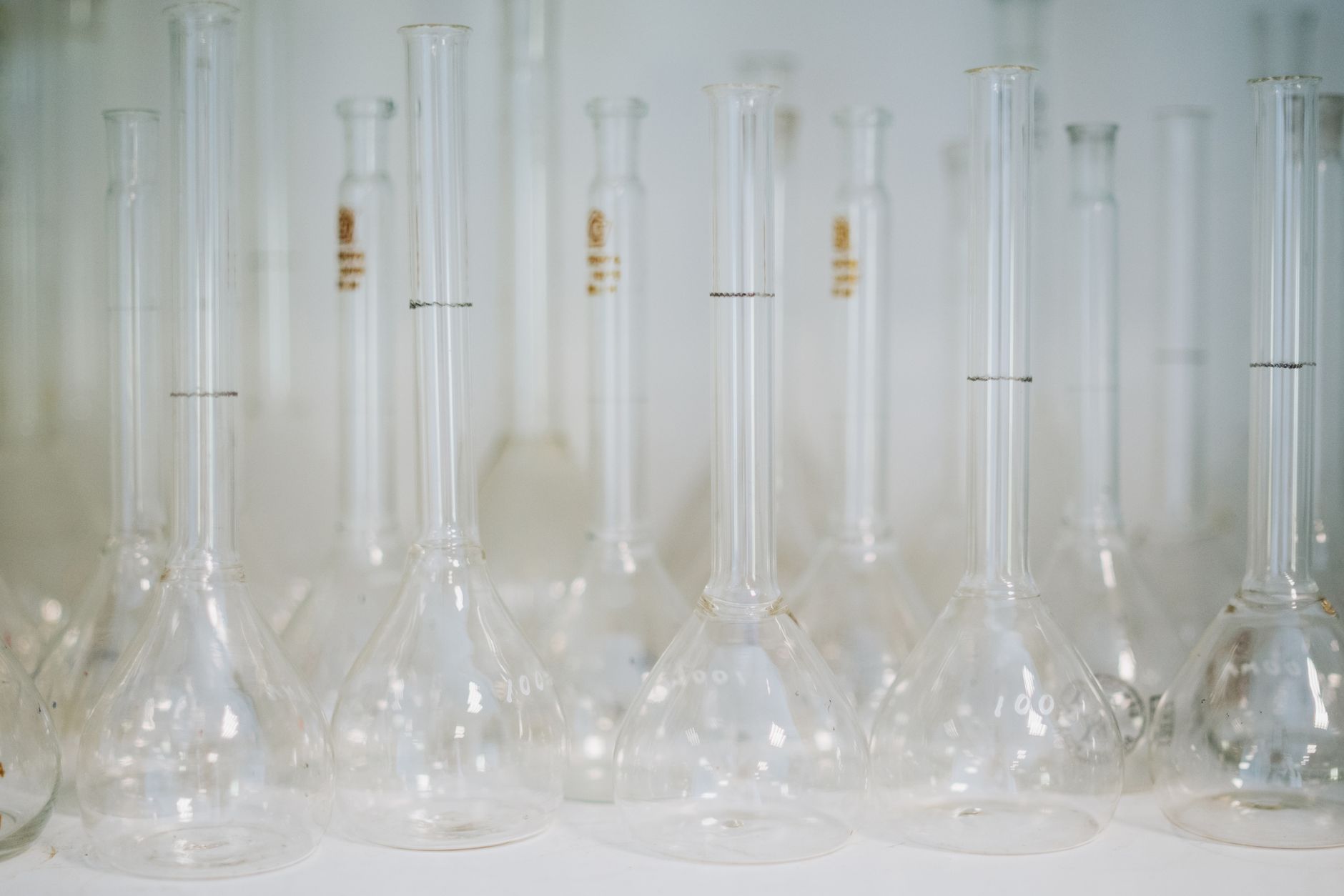
Hydrodealkylation and disproportionation convert toluene to benzene and xylenes; nitration and phosgenation routes yield TDI for polyurethane foam. Feedstock purity protects catalyst life and downstream selectivity.

Nitration-grade and industrial-grade toluene are commonly referenced against ASTM D841 and ASTM D362 respectively. These frameworks define purity, distillation range, acid wash colour, acidity and sulfur, rather than a model number.

Continuous processes favour a consistent impurity fingerprint over spot availability. Buyers typically align contract volumes, delivery cadence and test methods with the downstream unit's sensitivity.

A narrow distillation interval around 110.6 °C limits close-boiling paraffins that can raise recycle load in a mixed-acid nitration loop. Benzene and sulfur ceilings are watched for the same reason.

Acid wash colour flags unsaturated and thiophenic species that GC purity alone may miss; copper corrosion and sulfur tests complete the picture of a nitration feed.

For dinitrotoluene output, the useful conversation is about specification ceilings and lot consistency rather than headline purity. Agree test methods and documentation before volume commitments.
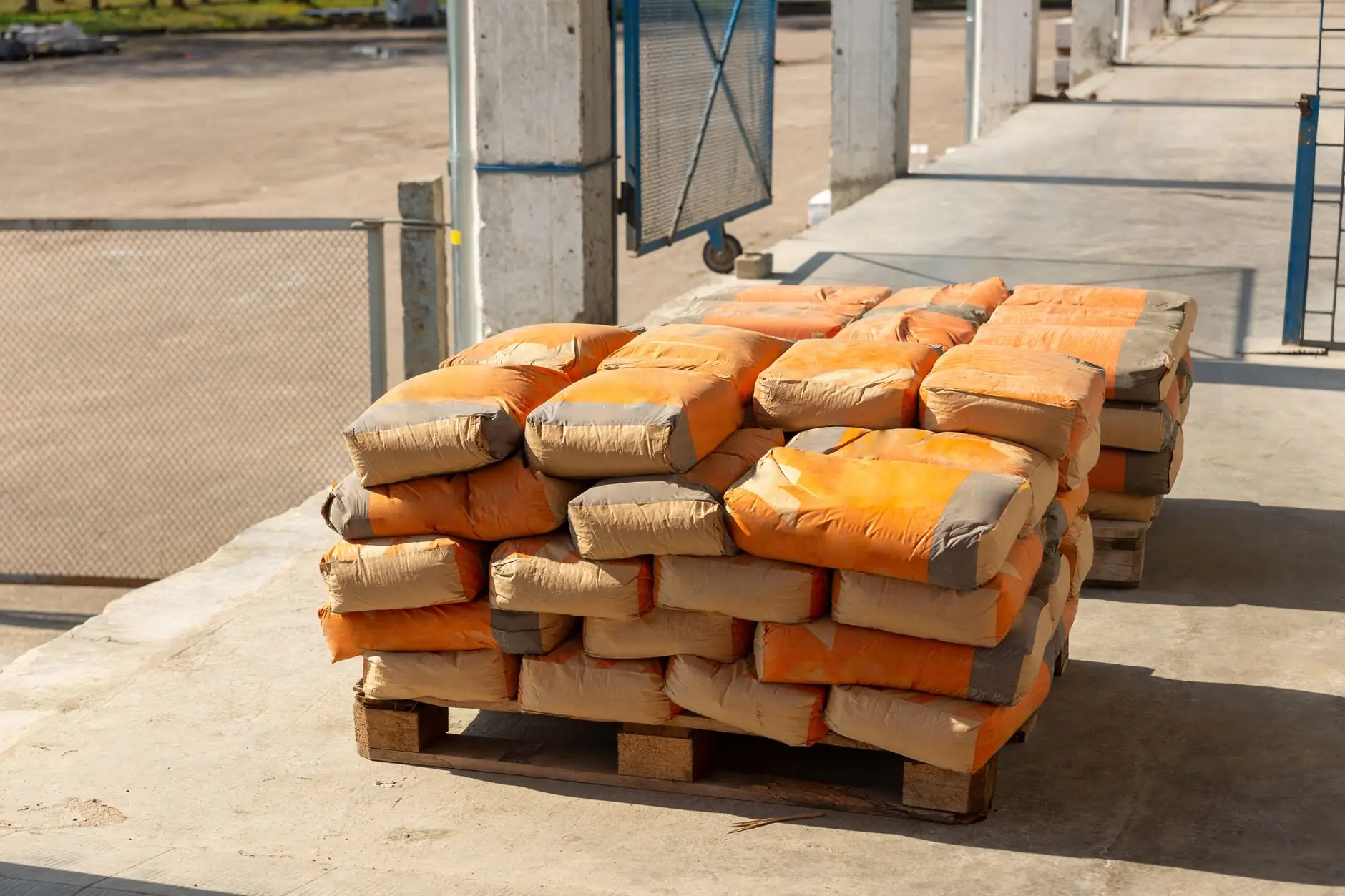
With a closed-cup flash point near 4.4 °C, toluene requires cool, ventilated storage, grounding and bonding during transfer, and segregation from oxidizers and ignition sources.
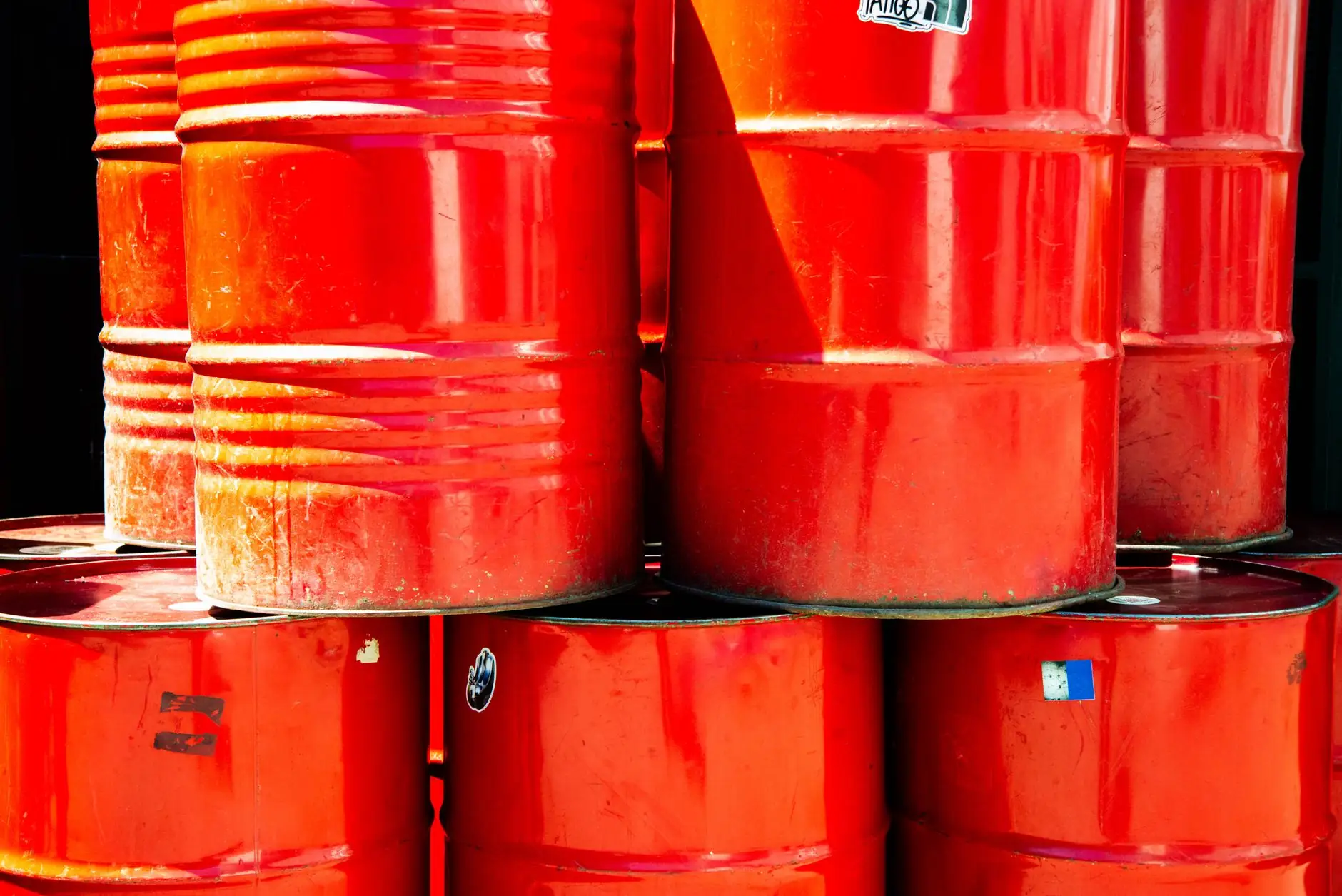
H225, H304, H315, H336, H361d and H373 describe flammability, aspiration hazard, skin irritation, drowsiness, reproductive suspicion and repeated-exposure organ effects. They shape storage and PPE choices.
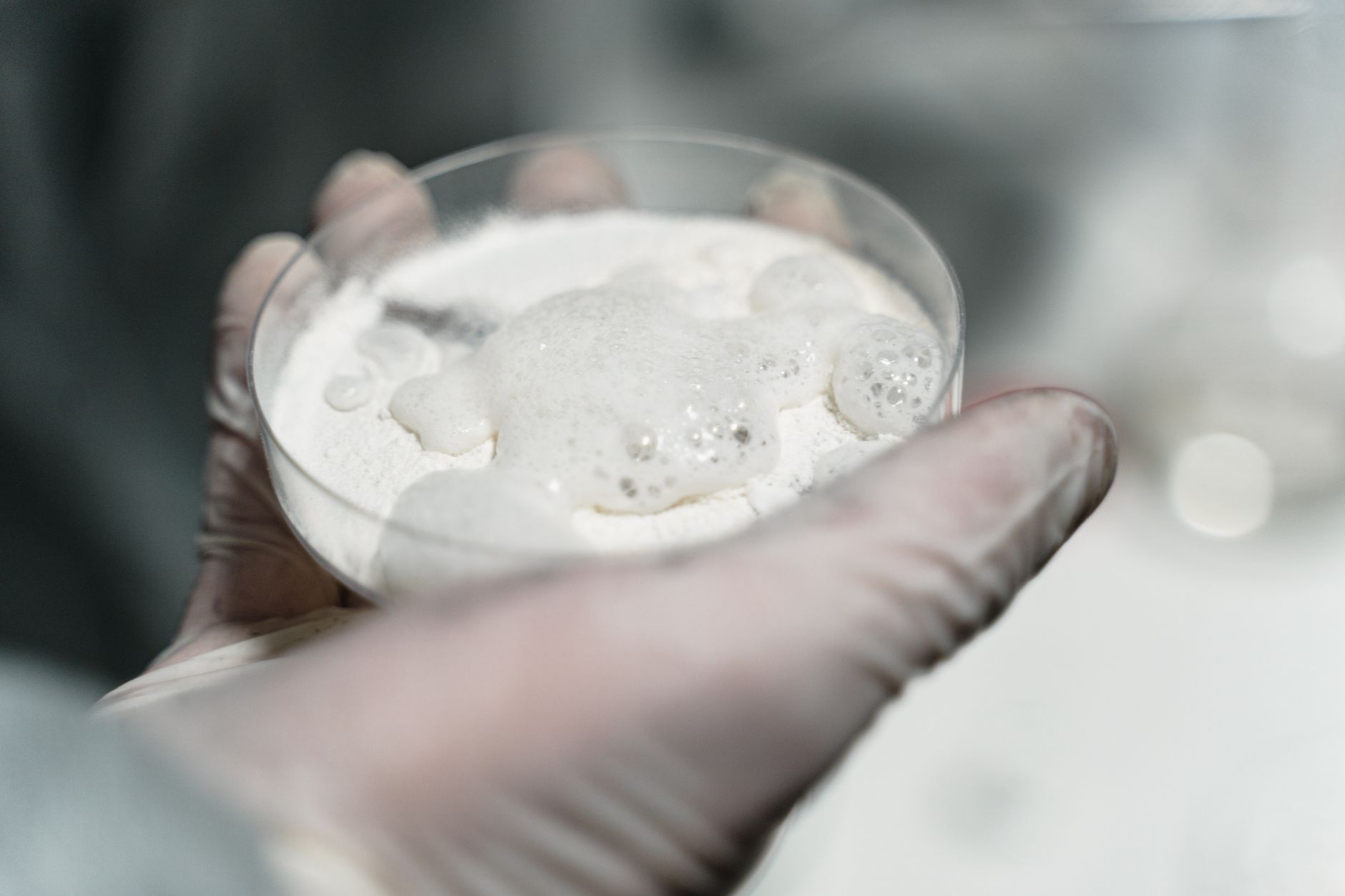
200 L drums suit lower-volume users, 1,000 L IBC tanks reduce handling for mid-size consumption, and road tankers serve continuous demand. Storage capacity and transfer procedure usually decide the choice.
Short answers on grades, specifications, packing and handling.

CAS 108-88-3, EC 203-625-9; molecular formula C7H8 with a molecular weight of 92.14 g/mol. All four grades share the same molecule.
No. Boiling point, density, flash point and refractive index are properties of toluene itself. The grades differ in purity and impurity ceilings — benzene, non-aromatics, sulfur, water, colour and distillation range.
Match the process: Solvent for coatings, inks and adhesives; Petrochemical Grade for synthesis feedstock; Nitration Grade for mixed-acid nitration; Commercial for thinners, rubber processing and blending. Our team can confirm the fit.
Typically 200 L steel drums, 1,000 L IBC tanks and bulk road tankers, subject to order volume and destination.
Keep containers tightly closed in a cool, dry, well-ventilated area away from oxidizers, heat and ignition sources, with grounding and bonding during transfer. It is classified UN 1294, Class 3, PG II.
No. Published figures are Typical values, not for specification. The controlling values for a specific lot are those in the accompanying documentation and the agreed specification.
Tell us the grade, volume and packing — we will respond with availability and pricing.
Reach Yuna Yang directly for grade selection, specification questions, packing and delivery terms. Include your intended application and destination so the quotation covers the right grade and transport classification.

 +8618112911328
 sales1@ascent-chem.com
 +8618112911328
 Yuna Yang
 Scan to WhatsApp